Know which Quran audio track you are listening to
2026-11-18 · MoMo
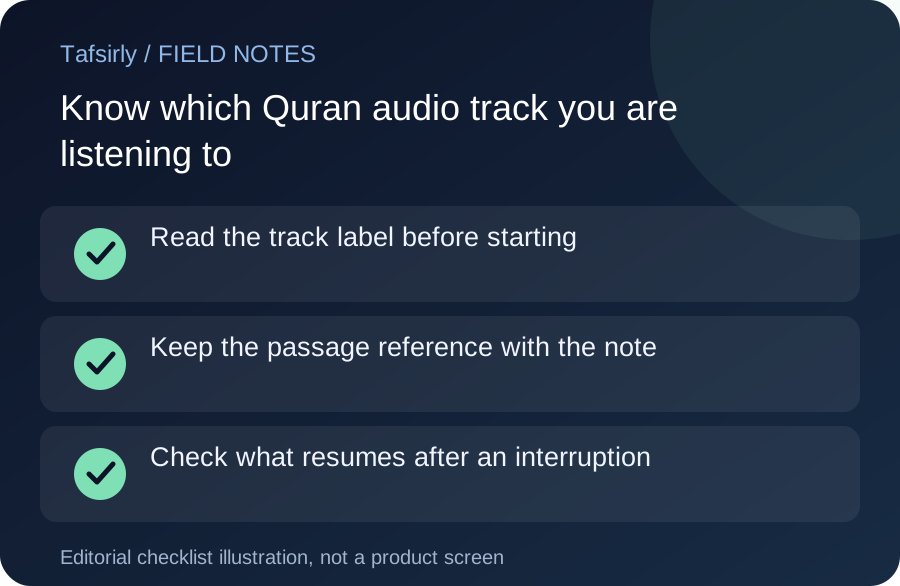
Read the track label before starting
Before a listening session, check the named surah, reciter and language shown by the player. A recitation, an audio translation of meanings and a spoken explanation are different kinds of material. Do not assume a familiar voice or a file name establishes which source is playing. Use the source information actually provided.
Keep the passage reference with the note
If you pause to write a study question, keep the surah and ayah reference and the source name with it. A playback time can help you return within one recording, but it is not a universal reference across reciters or recordings. Avoid presenting your own paraphrase as the exact Quran text or a quotation from a scholar.
Check what resumes after an interruption
After switching apps, changing tracks or returning on another device, verify the passage before continuing. Do not rely on an assumed saved position. If a player does not show enough source detail, keep that uncertainty visible and consult a named source rather than adding an attribution from memory.
Use the reader to connect sound and text
Return to the Quran reader for the passage, then consult the available named translation or tafsir when needed. This is an organizational aid for study, not a religious ruling, a grading of recitations or a claim that every audio track has identical features. Ask a qualified teacher about an interpretation or recitation question that needs expertise.